
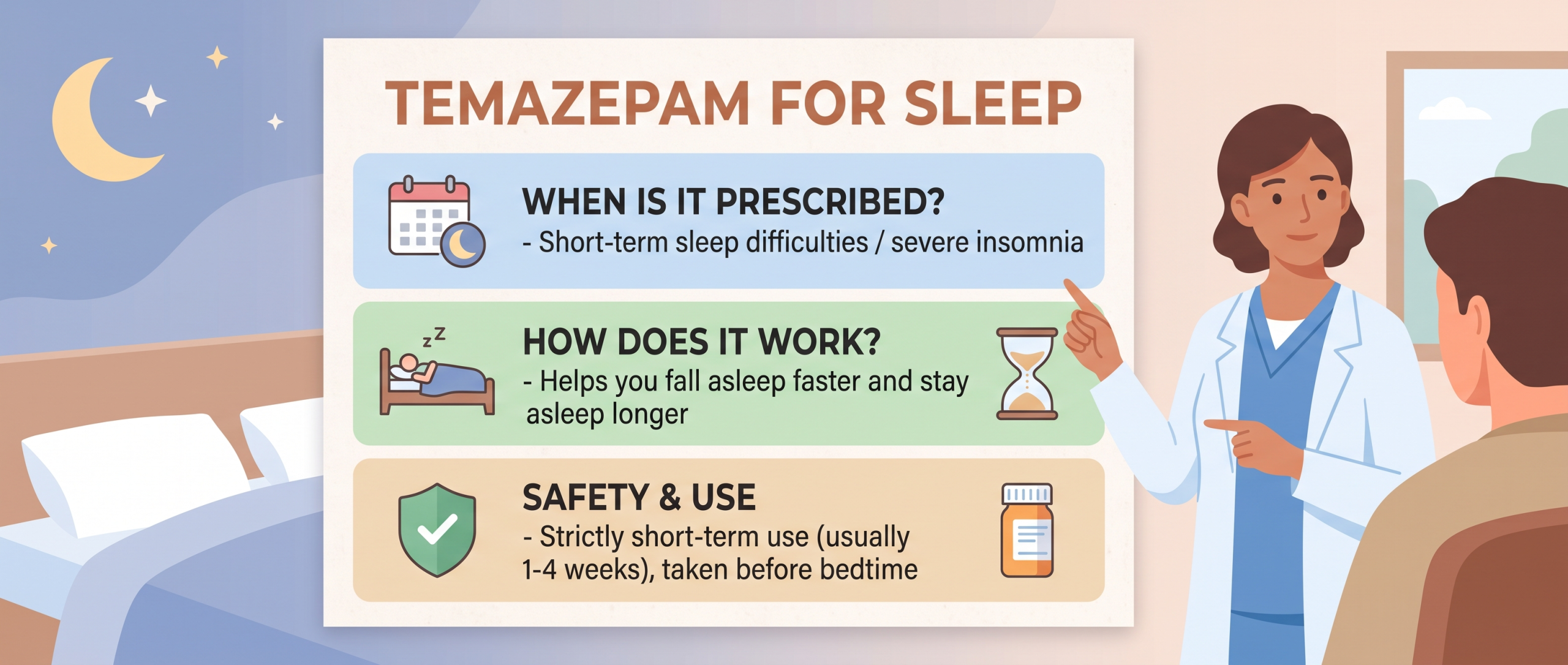
Temazepam for Sleep: When It's Prescribed and What to Expect
Insomnia affects millions of people in the UK, and temazepam is prescribed for short-term sleep difficulties. But when is it appropriate, how does it work, and what should you know before taking it?
This guide explains who temazepam may be prescribed for, how it works, how it is taken, and what to know about side effects, dependence and stopping treatment.
- What temazepam is
- How temazepam helps with sleep
- When it may be prescribed
- How long treatment usually lasts
- Common side effects and safety considerations
- How to stop temazepam safely
What Is Temazepam?
Temazepam is a benzodiazepine used primarily as a short-term treatment for insomnia.
In the UK, temazepam is available in tablet and liquid formulations and is classified as a controlled drug because of its potential for dependence and misuse.
Temazepam is considered an intermediate-acting benzodiazepine. It can help people fall asleep while generally having a shorter duration of action than longer-acting benzodiazepines such as diazepam.
How Does Temazepam Help You Sleep?
Temazepam works by enhancing the activity of GABA (gamma-aminobutyric acid), an inhibitory neurotransmitter in the brain.
Increasing GABA activity reduces nerve signalling and produces a calming and sedative effect. This can make it easier to fall asleep and remain asleep.
For people experiencing insomnia, temazepam may help reduce the time needed to fall asleep and promote more continuous sleep during the night.
Temazepam is metabolised primarily through glucuronidation and does not produce significant active metabolites. This contributes to a different duration and accumulation profile compared with longer-acting benzodiazepines such as diazepam.
Who Is Temazepam Prescribed For?
Short-Term Insomnia
Temazepam is commonly prescribed for acute or short-term insomnia associated with a particular event, illness or period of stress.
- Difficulty sleeping following a bereavement or major life change
- Sleep problems during periods of significant stress
- Temporary insomnia related to illness or recovery
- Disrupted sleep patterns such as those associated with jet lag
Chronic Insomnia and Short Courses
Temazepam is generally intended for short-term use. In some situations, a prescriber may consider intermittent treatment for people experiencing particularly severe periods of insomnia.
When Other Approaches Haven't Been Enough
Medication may be considered when non-medication approaches, such as sleep hygiene and cognitive behavioural therapy for insomnia (CBT-I), have not provided sufficient relief.
Temazepam is generally viewed as a short-term treatment rather than a long-term solution for persistent insomnia.
How Long Should You Take Temazepam?
Temazepam is generally prescribed for short periods because tolerance and physical dependence can develop with regular use.
Tolerance Can Develop
With repeated use, the body can become accustomed to the medicine. As a result, the same dose may become less effective over time.
Dependence Can Develop
Physical dependence can occur with regular benzodiazepine use. If treatment is stopped suddenly, some people may experience symptoms such as rebound insomnia, anxiety, irritability or difficulty concentrating.
Rebound Insomnia
Rebound insomnia refers to sleep difficulties returning after stopping a medicine, sometimes temporarily becoming more noticeable than before treatment began.
How Is It Taken?
Temazepam is generally taken once daily shortly before going to bed, according to the instructions provided by the prescriber.
Allow enough time for sleep
Temazepam can cause drowsiness and impaired alertness. It should only be taken when you can allow enough time for a full night's sleep and do not need to drive or perform activities requiring alertness shortly afterward.
- Take it only as prescribed by your doctor.
- Avoid taking an additional dose because you did not fall asleep immediately.
- If a dose is missed, follow your prescriber's or pharmacist's instructions rather than taking extra medication.
Common Side Effects
Like other benzodiazepines, temazepam can cause side effects, particularly when treatment is first started.
- Drowsiness, including possible next-day sleepiness
- Dizziness or lightheadedness
- Memory problems, including difficulty remembering events after taking the medicine
- Impaired coordination and balance
- Dry mouth
- Headache
Less common effects can include confusion, particularly in older adults, mood changes and unusual agitation or restlessness.
Temazepam and Alcohol
Do not combine temazepam with alcohol
Alcohol and temazepam both depress the central nervous system. Taking them together can increase sedation, impair coordination and balance, and potentially cause dangerously slowed breathing.
Avoid alcohol when taking temazepam unless your healthcare professional has specifically advised otherwise.
Temazepam in Older Adults
Older adults can be more sensitive to the effects of benzodiazepines. Temazepam may therefore increase the risk of daytime drowsiness, impaired balance, falls and confusion.
Prescribers may use lower doses and shorter treatment periods in older adults. Other approaches to insomnia may also be considered depending on the individual's circumstances.
How to Stop Temazepam Safely
If you have been taking temazepam regularly for more than a short period, stopping suddenly may cause withdrawal symptoms or rebound insomnia.
Gradual reduction
A healthcare professional can create a gradual tapering plan based on your dose, duration of treatment and individual circumstances. Do not change the dose or stop treatment without discussing it with your prescriber.
The Bottom Line
Temazepam is an established treatment for short-term insomnia. It can help people fall asleep and may reduce disruptions during the night, making it useful during periods of acute sleep disturbance.
However, it is intended for short-term use because tolerance, dependence and withdrawal can develop with continued treatment. The risks and benefits should be considered carefully with a healthcare professional.
Good sleep habits can also support better sleep, including keeping consistent sleep and wake times, maintaining a dark and quiet sleeping environment, limiting stimulating activities before bed and avoiding caffeine later in the day.
If anxiety is contributing to your sleep problems, treatment should address the underlying cause rather than relying only on sleeping medication. Persistent insomnia should be discussed with your GP or another qualified healthcare professional.
