
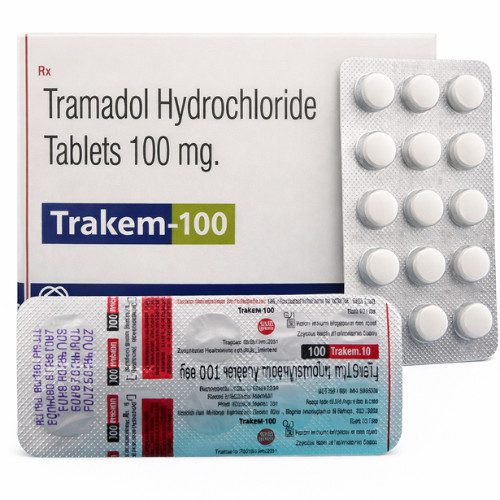
£66.00 – £465.00Price range: £66.00 through £465.00
Rated 5.0/5 from verified customers
| Pharmaceutical Manufacturer | Bristol Pharma, Elikam Pharmacueticals |
| Brand | Trakem 100mg, Tramadol 50mg |
| Medicinal ingredient | Tramadol HCL |
| Available Dose | 50mg, 100mg, 200 mg |
| Pill Color | White |
| Manufacturing Origin/strong> | U.K & India |
Tramadol is a prescription opioid painkiller used to manage moderate to severe pain when other suitable pain treatments have not provided sufficient relief.
Tramadol has a dual mechanism of action. It activates mu-opioid receptors in the central nervous system and inhibits the reuptake of noradrenaline and serotonin, helping reduce pain signalling.
Tramadol 100mg is available in certain formulations, including prolonged-release tablets. The exact formulation is important because immediate-release and prolonged-release products have different dosing instructions.
Tramadol may be prescribed for:
Important: Tramadol is an opioid and can cause tolerance, physical dependence, addiction and potentially life-threatening respiratory depression. It should only be used under medical supervision.
Tramadol reduces pain through two mechanisms within the central nervous system.
Immediate-release tramadol may begin providing pain relief within approximately 30 to 60 minutes, although the onset varies between individuals.
Prolonged-release tramadol is designed to release the medicine gradually over a longer period. Its onset and duration differ from those of immediate-release products.
Tramadol has an elimination half-life of approximately six hours in many healthy adults, while its active metabolite may remain in the body longer.
Usage guidance: Follow the instructions for your exact tramadol formulation. Immediate-release and prolonged-release products are not interchangeable tablet for tablet. Never crush or chew prolonged-release tablets unless the specific product information explicitly permits it.
Tramadol is available in different strengths and formulations, including immediate-release capsules, oral solutions and prolonged-release tablets.
The appropriate dose depends on the type and severity of pain, previous opioid exposure, kidney and liver function, and individual response to treatment.
A 100mg tablet must be identified by its exact formulation before use. The strength alone does not establish the correct dosing interval.
| Detail | Information |
|---|---|
| Generic name | Tramadol |
| Active ingredient | Tramadol hydrochloride |
| Strength discussed | 100mg |
| Medicine class | Opioid analgesic |
| Mechanism | Mu-opioid receptor activity and inhibition of serotonin and noradrenaline reuptake |
| Primary use | Management of moderate to severe pain |
| Formulations | Immediate-release and prolonged-release products, depending on brand and strength |
| Typical onset | Approximately 30–60 minutes for immediate-release products |
| Elimination half-life | Approximately 6 hours for tramadol in many healthy adults |
| UK legal status | Prescription-only, Schedule 3 controlled medicine |
Dosage warning: Tramadol 100mg should only be used at the dose and frequency prescribed by a healthcare professional. Taking excessive amounts increases the risk of seizures, serotonin syndrome, respiratory depression and overdose.
Tramadol may cause side effects, particularly when treatment begins or the prescribed dose changes.
Commonly reported side effects include:
Nausea and dizziness may be more noticeable when starting treatment. Persistent or severe symptoms should be discussed with a healthcare professional.
Tramadol can also cause seizures, sometimes even at prescribed doses, particularly in susceptible individuals or when combined with certain medicines.
Important safety information: Avoid alcohol while taking tramadol. Alcohol increases sedation and the risk of dangerous breathing problems.
Combining tramadol with opioids, benzodiazepines, sleeping medicines or other sedatives can cause respiratory depression, coma or death.
Tramadol may not be suitable for everyone. Speak to a qualified healthcare professional before taking this medicine, particularly if you have:
Tramadol can interact with antidepressants, including selective serotonin reuptake inhibitors (SSRIs), serotonin and noradrenaline reuptake inhibitors (SNRIs) and certain other medicines.
These combinations may increase the risk of serotonin syndrome, a potentially serious condition involving excessive serotonin activity.
Tramadol must not be used with monoamine oxidase inhibitors (MAOIs) or within 14 days of stopping an MAOI.
Regular tramadol use can cause physical dependence. Abruptly stopping treatment after prolonged use may cause withdrawal symptoms.
Safety guidance: Do not drive or operate machinery if you experience drowsiness, dizziness or impaired concentration. Avoid alcohol and do not combine tramadol with other sedating medicines without medical advice.
Tramadol is a prescription-only Schedule 3 controlled medicine in the United Kingdom. It should only be obtained through a lawful, appropriately regulated pharmacy following the necessary prescription and clinical checks.
Before obtaining tramadol online, consider the following safety requirements:
Safety note: Websites offering tramadol without appropriate prescription checks should not automatically be considered authorised UK pharmacies.
Tramadol is prescribed for moderate to severe pain when an opioid is considered clinically appropriate.
Tramadol acts on opioid receptors and affects serotonin and noradrenaline signalling, helping reduce pain perception.
Immediate-release tramadol may begin providing pain relief within approximately 30 to 60 minutes. The onset varies between individuals.
Immediate-release products release the medicine more quickly, while prolonged-release products release it gradually over a longer period. Their dosing schedules differ.
Yes. Tramadol is an opioid and can cause tolerance, physical dependence and addiction, particularly with prolonged use.
Yes. Tramadol can increase seizure risk, including at prescribed doses. The risk may be higher in people with epilepsy or those taking certain interacting medicines.
Yes. Certain antidepressants can interact with tramadol and increase the risk of seizures or serotonin syndrome. A clinician should review all medicines before treatment.
No. Alcohol increases sedation and the risk of respiratory depression, overdose and serious impairment.
Yes. Tramadol is a prescription-only Schedule 3 controlled medicine in the United Kingdom.
Seek emergency medical assistance if someone taking tramadol develops slow or difficult breathing, becomes unusually difficult to wake or loses consciousness.
Seek urgent medical attention if seizures occur or if symptoms such as high fever, severe agitation, muscle rigidity, tremor or confusion suggest serotonin syndrome.
Contact a healthcare professional if you experience persistent dizziness, nausea, significant drowsiness or symptoms of dependence or withdrawal.
Medical disclaimer: This article is for general educational purposes only and does not replace professional medical advice. Tramadol is a prescription-only controlled medicine and should only be taken as directed by a qualified prescriber. Speak to a doctor or pharmacist if you are pregnant, breastfeeding or taking other medicines.

Reviews
There are no reviews yet.